
Maintaining the physical security of a commercial complex, industrial facility, or high-tier residential estate has evolved far beyond the capabilities of traditional locking mechanisms. For generations, mechanical brass keys and manual deadbolts formed the primary line of defense against unauthorized entry. However, in a fast-paced modern operational landscape where security threats are increasingly sophisticated, physical keys present an ongoing liability. Keys can be easily lost, stolen, or duplicated without authorization, and when an employee departs an organization, the expensive chore of rekeying the entire facility places a repetitive financial burden on the operating budget.
The modern paradigm of smart asset protection relies on digital perimeter governance, replacing passive hardware with intelligent, networked entry systems that track, restrict, and record every physical movement across your property boundaries. Implementing an enterprise-grade electronic entry system completely redefines how a property manager or business owner oversees their daily operations, shields high-value inventory, and protects sensitive workplace zones. Understanding the operational advantages of electronic entry tracking, identifying the core hardware components of a secure portal, and knowing how to collaborate with certified systems specialists are the essential foundation blocks of comprehensive structural defense.
The Compounding Operational Vulnerabilities of Legacy Mechanical Locks
Many corporate operators and facilities managers manage their properties under a false sense of absolute security, assuming that heavy-duty standard doors and classic alarm sensors are enough to protect their internal perimeters. In reality, relying strictly on traditional keyways introduces deep hidden vulnerabilities that leave an enterprise highly exposed to inventory shrinkage, regulatory compliance failures, and undocumented internal breaches.
A major flaw inherent to all mechanical lock systems is the total lack of accountability and real-time data capturing. When a standard key is turned in a lock box or a secure inventory cage in the middle of the night, there is zero record of who opened the door, how long they remained inside the room, or what assets were shifted. If an internal theft or data breach occurs, tracking down the responsible individual turns into an incredibly frustrating exercise in guesswork and fluid human memory. A professional digital security network resolves this blind spot completely by assigning unique electronic credentials to each individual user, building an immutable digital audit path that logs the exact millisecond an entry point is accessed.
Furthermore, managing physical access permissions across a large or shifting workforce introduces a logistical nightmare. If an organization operates twenty separate secure doors and employs fifty distinct workers, maintaining an accurate key registry requires excessive administrative hours. The moment a critical key is misplaced or a high-level manager leaves the firm under unfavorable conditions, the entire physical security framework collapses unless the business owner spends thousands of dollars to physically replace every lock cylinder on the premises. Digital management architecture eliminates this friction entirely, allowing administrators to instantly revoke, modify, or extend specific user credentials across the entire facility with a few clicks on a centralized computer program.
The Technical Framework of Smart Entry Architecture
Advanced electronic entry systems replace the mechanical physical key with an integrated network of solid-state hardware, centralized controllers, and secure digital identifiers. This light-speed communication grid transforms passive barriers into proactive security touchpoints that actively communicate with your overall building management system.
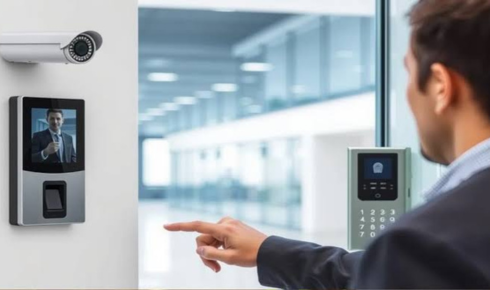
The hardware deployment begins at the portal itself, where high-durability electromagnetic locks or heavy-duty electric strikes replace standard physical latches. These electronic locking elements remain continuously pressurized and locked until the system receives a verified digital command. To trigger an authorization, users present a unique secure credential, such as an encrypted radio-frequency identification badge, a secure mobile smartphone token, or a highly advanced biometric profile like a fingerprint or iris scan. The local reader instantly captures this encrypted data stream and forwards it to a secure centralized distribution controller housed safely inside a locked utility closet.
The centralized controller functions as the primary brain of your building’s perimeter defense. It cross-references the incoming card credential against your facility’s master database, verifying not only if the user is authorized to enter that specific room, but also confirming if their access schedule permits entry at that exact time of day. If the credential clears the pre-programmed security rules, the controller drops the electrical voltage to the lock mechanism, allowing the door to open smoothly while simultaneously logging the transaction in the master server vault. If the door is held open past a set threshold or forced open without a card scan, the controller instantly triggers a silent alert, flashes a notification on your smartphone app, and directs nearby high-definition security cameras to focus directly on the breach zone.
Securing the Ideal Integration Partner for Precision Deployment
Because the engineering and installation of advanced electronic portals involve a highly technical fusion of low-voltage electrical work, digital network programming, database management, and strict local building code compliance, it cannot be treated as a basic handyman project. If your facility is ready to transition to a resilient, enterprise-grade barrier network that offers absolute control over your workforce flow, securing the services of a certified access control technician ensures you partner with an expert who can seamlessly wire, program, and maintain your system to commercial standards.
A true specialized systems integrator begins every project with an exhaustive physical audit of your commercial building, industrial warehouse, or private estate. They ensure that your electronic hardware integrates flawlessly with your existing fire alarm overrides, so doors automatically unlatch during an emergency evacuation, while simultaneously optimizing your card readers for maximum daily durability. They transition your system from a collection of isolated wires into a beautifully streamlined, high-performance security shield that operates perfectly hour after hour.
Simple Preventive Habits for Ongoing System Resilience
Achieving an unshakeable, fully automated entry shield inside a premier installation window is a monumental milestone, but keeping that infrastructure functioning at maximum capacity requires light ongoing maintenance and strategic operational awareness.
First, establish a clean, monthly operational test for your backup power supply enclosures. True commercial access control arrays feature dedicated power boxes equipped with commercial-grade backup batteries designed to keep your doors securely locked and fully operational during a sudden municipal power failure or rolling blackouts. Having your specialized systems technician check the charging levels and physical health of these battery systems once a year guarantees your building remains entirely fortified even when the main electrical grid drops.
Second, perform a seasonal cleaning of your outdoor credential readers and magnetic alignment pads. Windblown dust, microscopic grit, and environmental debris can gradually coat the scanning faces of keypads and proximity readers, slightly reducing their reading range and causing minor delays during morning shift rushes. Wiping down the scanning panels with an antistatic cloth and keeping the door hinges properly lubricated ensures that doors latch perfectly flat against their magnetic locks every single time, preventing alignment errors and keeping your physical seal tight.
The Lasting Practical and Financial Return of Intelligent Security Systems
Committing your resources to a premier, hardwired digital access framework creates profound operational benefits for your everyday business routine alongside significant financial returns.
From a practical financial viewpoint, an advanced entry network quickly offsets its initial deployment costs by completely stopping internal inventory leakage, preventing unauthorized trespassers from disrupting production lines, and entirely erasing the repetitive costs associated with commercial rekeying services. Most top-tier property insurance underwriters offer substantial monthly discount incentives to commercial locations protected by a hardwired digital tracking network, adding meaningful ongoing savings directly back into your operating budget.
Ultimately, the most valuable return on your investment is the complete freedom and absolute confidence that comes with total boundary authority. Whether you are running a fast-growing corporate firm, managing a sprawling logistics hub, or protecting a private family compound, you can go about your day with perfect peace of mind, knowing your entryways are intelligent, your high-value spaces are tracked, and your primary infrastructure is entirely secure against any challenge. If you are ready to start your journey, click here to find us on the map and book your Service today.