
For many homeowners, having a private well feels simple and reassuring. The water comes from your own property, there’s no monthly municipal water bill, and in a way, it feels a little closer to nature. But anyone who has lived with well water for a while knows the truth: it can be wonderful, but it can also be stubborn.
One month the water seems perfectly fine. Then suddenly, the laundry has orange marks, the shower smells strange, or the kitchen faucet leaves cloudy spots on the sink. These little signs are easy to ignore at first, especially when the water still looks clear in a glass. But well water problems rarely fix themselves. They usually get more noticeable with time.
That’s where well water treatment becomes important. Not in a scary, overly technical way, but as a practical way to make daily life easier. Clean water affects cooking, bathing, laundry, appliances, plumbing, and even how your home feels. When the water is right, you stop thinking about it. And honestly, that’s the goal.
Understanding What Makes Well Water Different
Unlike city water, private well water is not treated before it reaches your home. It moves through soil, rock, minerals, and underground layers before being pumped into your plumbing system. Along the way, it can pick up iron, manganese, sulfur, sediment, hardness minerals, bacteria, and other natural elements.
Some of these are not always dangerous, but they can still create frustrating problems. Hard water can leave scale on fixtures. Iron can stain tubs and toilets. Sulfur can make water smell unpleasant. Sediment can clog filters, valves, and appliances. Even if the water is technically usable, that does not mean it is comfortable or ideal.
This is why testing matters. Guessing at a water issue is a bit like trying to fix a car engine by listening from across the driveway. You might get lucky, but more often, you’ll spend money on the wrong solution. A proper water test helps identify what is actually in the water, how much is present, and which treatment method makes sense.
Those Orange Marks Are Usually Trying to Tell You Something
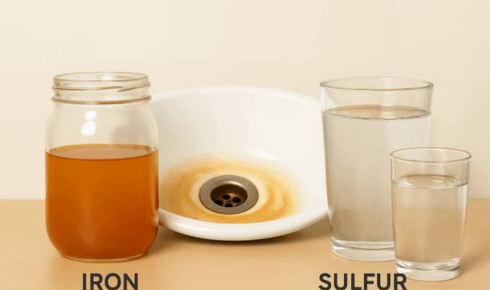
One of the most common complaints from well owners is staining. You clean the toilet bowl, and a few days later, the orange or reddish marks come back. The bathtub develops streaks. White clothes come out of the wash looking dull or slightly rusty. It is annoying, and it can make even a clean home look neglected.
These are often iron stains, and they usually come from dissolved iron in the groundwater. When iron is exposed to air, it oxidizes and leaves behind that rusty color. Sometimes manganese is part of the problem too, creating darker brown or black marks.
The tricky part is that iron can appear in different forms. Clear-water iron may look invisible when it first comes from the tap, then stain later. Red-water iron may already look rusty. Iron bacteria can create slimy buildup in pipes, tanks, or fixtures. Each type may need a different treatment approach, which is another reason testing is so useful.
Common solutions can include iron filters, oxidation systems, water softeners in certain cases, or more advanced treatment if bacteria are involved. The right choice depends on the exact water chemistry. A simple filter from the hardware store might help a little, but it usually will not solve a serious iron issue for long.
When Water Smells Like Rotten Eggs
Few water problems get attention faster than a bad smell. You turn on the shower and suddenly the bathroom has that rotten-egg odor. Sometimes it happens only with hot water. Other times it comes from every tap. Either way, it is not something most people want to live with.
That smell is usually linked to sulfur odors, often caused by hydrogen sulfide gas or sulfur bacteria. In some homes, the water heater can make the smell worse because of reactions inside the tank. In others, the source is the well itself.
A bad odor does not always mean the water is unsafe, but it should not be ignored. It can affect taste, make bathing unpleasant, and in higher levels, hydrogen sulfide can corrode metal plumbing parts. The solution may involve aeration, carbon filtration, oxidation, chlorination, or water heater maintenance, depending on where the smell is coming from.
One thing homeowners often notice is that odor problems are inconsistent. The water may smell worse in the morning, after the house has been empty, or during certain seasons. That does not mean the problem is imaginary. It simply means the conditions inside the well, plumbing, or water heater are changing.
Why One-Size-Fits-All Filters Often Disappoint
It is tempting to buy a filter, install it, and hope for the best. And sometimes, for minor taste or sediment issues, that can help. But well water is rarely that simple. Two homes on the same road can have completely different water problems. One may struggle with iron. Another may have hardness. A third may have sulfur, sediment, or bacteria.
A treatment system should match the water, not just the symptom. For example, a softener is excellent for hardness, but it may not be enough for heavy iron. A carbon filter can improve taste and odor, but it may become exhausted quickly if the water has high levels of contaminants. A sediment filter can catch particles, but it will not remove dissolved minerals.
The best systems usually start with testing, then combine the right equipment in the right order. That may include sediment filtration before a softener, oxidation before filtration, UV disinfection after other treatment, or reverse osmosis for drinking water. The setup does not need to be complicated, but it does need to be thoughtful.
Protecting Plumbing and Appliances
Water quality is not just about what comes out of the tap. Poor well water can quietly wear down appliances and plumbing. Water heaters, dishwashers, washing machines, coffee makers, and ice machines all feel the effects.
Hardness can create scale buildup. Iron can clog screens and valves. Sediment can reduce water flow. Corrosive water can damage pipes. Over time, small issues become repair bills. Many homeowners only realize how much their water was affecting the house after they install the right treatment system and appliances start working better.
There is also the comfort factor. Softer, cleaner water can make soap lather better, towels feel nicer, dishes look clearer, and showers feel less harsh. These are small daily improvements, but they add up.
Testing Before Treating Is the Smart Move
A good water test should check more than just one thing. Depending on your area and symptoms, it may include iron, manganese, hardness, pH, total dissolved solids, sulfur, bacteria, nitrates, arsenic, and other local concerns. Some tests are basic, while others are more detailed.
Annual testing is a good habit for private well owners, especially for bacteria and safety-related contaminants. It is also smart to test after flooding, nearby construction, changes in taste or smell, or any major well repair.
The point is not to create worry. It is to give you clarity. Once you know what is in the water, the solution becomes much easier to choose.
A Better Water System Should Feel Effortless
The right well water system should not feel like another chore. It should quietly do its job in the background. No constant staining. No strange smells. No guessing every time you fill a glass or run the washing machine.
Of course, every system needs some maintenance. Filters have to be changed. Salt may need to be added. Some systems require periodic service. But compared with scrubbing stains, replacing appliances, or dealing with water that smells bad, routine maintenance is usually the easier path.
Well water can be excellent water. It just needs to be understood. When homeowners take the time to test it and treat it properly, they often find that the problems they accepted as “normal” were actually fixable all along.
In the end, clean water is not only about safety or equipment. It is about peace of mind. It is about turning on the tap and not wondering what smell, stain, or surprise might show up today. And honestly, that kind of simple confidence is worth a lot.