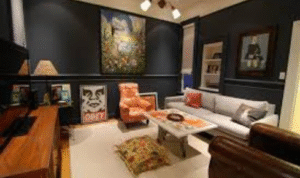

Lower walls take more hits—bags, toys, shoes, furniture edges, kids’ hands. They collect scuffs and marks faster. A slightly darker shade on the lower part hides small wear better, while a lighter tone above keeps the room feeling airy.
You can achieve this with panelling, a painted dado line, or just careful masking. In dining areas, corridors and kids’ rooms, this makes maintenance easier: the part that gets dirty more often is naturally more forgiving.
It’s a practical trick disguised as a design choice.
Useful related reads:
- How can repainting just internal doors and frames give a quick refresh without major disruption?
- What benefit is there in using a different paint finish for ceilings compared to walls?
- Why is it smart to keep leftover labelled paint tightly sealed for future touch-ups?
- How can painting only one accent wall change the energy of a room without overwhelming it?