We use water so often that it becomes almost invisible in our daily lives. It runs while we’re brushing our teeth, fills the kettle before breakfast, washes our vegetables, and keeps the shower going at the end of a long day. Because it’s so familiar, we don’t always stop to wonder what’s actually in it.
Then the little clues start appearing. A white film around the faucet. A strange taste in your morning coffee. Spots on freshly washed glasses. Maybe the water simply doesn’t taste as pleasant as you’d like.
That’s usually when people start looking into water treatment. And, honestly, the number of options can be confusing. There are softeners, carbon filters, membrane systems, mineral cartridges, and plenty of products promising to transform ordinary tap water into something extraordinary.
The trick is not finding the most complicated system. It’s finding the one that addresses your actual needs.
Begin With the Water You Have
Before choosing any filtration equipment, learn something about your water.
Hardness is one common issue. Water can also contain sediment, chlorine, iron, unpleasant odors, or other substances depending on its source and the local plumbing system. Private well water can have its own set of considerations.
A water test can give you a much clearer starting point. Instead of guessing why your water tastes odd or why scale keeps appearing, you’ll have some useful information to work with.
This sounds like an extra step, but it can save money. Buying equipment first and figuring out the problem later is backwards. It’s a little like buying medicine without knowing what you’re treating.
Hard Water Needs a Different Approach
If your main problem is mineral buildup, filtration may not be enough.
Hard water contains minerals such as calcium and magnesium. They’re naturally occurring, but they can leave scale on fixtures and inside appliances. Over time, that buildup can become frustrating, especially around water heaters, showerheads, kettles, and dishwashers.
For households with significant hardness, water softeners can be an effective solution. Traditional softeners use ion exchange to reduce calcium and magnesium in the water. This can mean less scale, easier cleaning, and soap that lathers more readily.
It’s worth remembering, though, that softening and filtration are different jobs. A softener isn’t designed to remove every contaminant, and a filter isn’t necessarily designed to soften water.
Knowing that distinction makes shopping much easier.
Why Reverse Osmosis Gets So Much Attention
If you’re particularly concerned about the quality of your drinking water, you may have come across reverse osmosis.
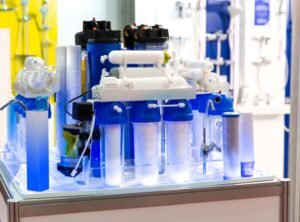
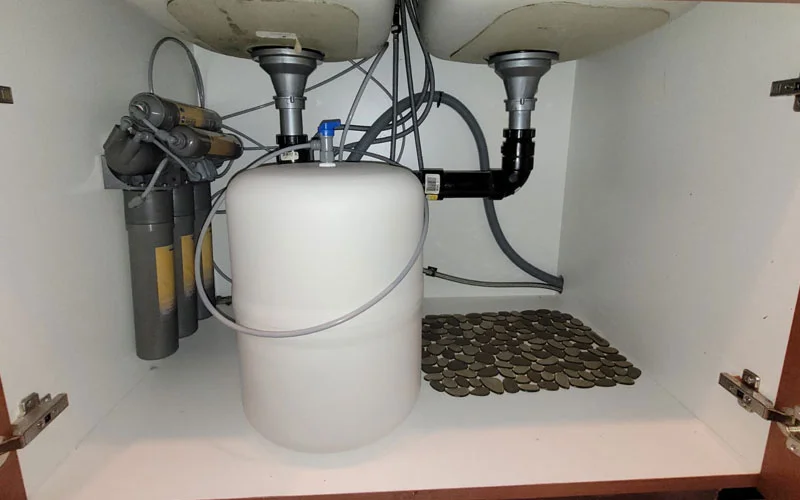
Reverse osmosis works by pushing water through a semipermeable membrane. The membrane allows water molecules to pass while reducing many dissolved substances. Most residential systems also use pre-filters and post-filters as part of the process.
That combination is one reason reverse osmosis water filters are popular for kitchen drinking water. They can reduce a broad range of dissolved impurities, depending on the specific system and its certifications.
But reverse osmosis isn’t automatically the right choice for every household.
These systems can produce wastewater during filtration and may require filter and membrane replacements. They also remove minerals along with many other dissolved substances, which isn’t necessarily a problem, but it’s something homeowners should understand before purchasing.
The best approach is to check what a particular system is certified to reduce rather than relying on vague claims about “pure” water.
What About Alkaline Water?
Alkaline water has become increasingly popular, partly because of the idea that water with a higher pH might offer special health benefits.
The reality is a little less exciting than some advertisements make it sound. Your body has sophisticated systems for maintaining its blood pH, and drinking alkaline water isn’t a substitute for a healthy diet or medical treatment.
Still, some people genuinely prefer the taste of alkaline water. Certain filtration systems can also add minerals back into water after treatment.
That’s where alkaline water filters enter the conversation. Depending on the design, these systems may combine filtration with a mineral stage intended to increase the water’s pH.
If you’re considering one, focus on the filtration performance first. Find out what contaminants it removes, what certifications it carries, and how often its cartridges need changing. The word “alkaline” alone doesn’t tell you whether the system is good.
Taste Matters, Too
Water quality isn’t always about a laboratory report.
Taste and smell have a surprisingly big influence on whether people actually drink enough water. If tap water has a noticeable chlorine taste or an unusual odor, someone may simply avoid it and reach for bottled drinks instead.
Activated carbon filtration is commonly used to improve taste and odor by reducing chlorine and certain other compounds. For many households, that alone can make tap water much more enjoyable.
And there’s something satisfying about filling a reusable bottle from your own kitchen instead of constantly buying cases of bottled water.
Don’t Ignore Filter Maintenance
Here’s the unglamorous part of owning a filtration system: filters need changing.
A cartridge that’s past its useful life may not perform as intended. Some systems have indicators or reminders, while others rely on a replacement schedule.
Before buying, check the cost and availability of replacement filters. A system with inexpensive equipment but unusually expensive cartridges can become frustrating over time.
Also consider how easy the replacements are to install. If changing a filter requires calling a technician every few months, that’s an ongoing cost worth including in your budget.
Look for Real Certifications
Water treatment marketing can get pretty creative.
You’ll see phrases like “advanced purification,” “ultra-clean water,” and “next-generation technology.” Those phrases may sound impressive, but they don’t necessarily tell you what a system actually does.
Look for recognized certifications and specific performance claims. A reputable manufacturer should be able to explain which contaminants the system is designed to reduce and under what testing conditions.
Don’t be shy about asking questions. If a salesperson can’t clearly explain what the equipment does, that’s a reason to slow down.
Think About Where You Need Treatment
You don’t necessarily need to treat every drop of water entering your house.
If the main concern is drinking and cooking, a point-of-use system under the kitchen sink might be enough. If hard water is affecting showers, appliances, laundry, and plumbing throughout the property, whole-house treatment could make more sense.
This distinction can have a big impact on both installation cost and maintenance.
There’s no benefit in turning a simple water-quality problem into an unnecessarily complicated project.
The Right Choice Is the One That Fits
Choosing between different water treatment systems can feel like comparing apples, oranges, and a few things that aren’t even fruit.
But once you know what you’re trying to accomplish, the decision becomes much clearer.
Start with a water test where appropriate. Identify the specific concern. Compare technologies based on what they actually remove or change. Check certifications, maintenance requirements, replacement costs, and installation needs.
Most importantly, don’t let a dramatic sales pitch make the decision for you.
A good water treatment system should quietly do its job in the background. You shouldn’t need to think about it every time you fill a glass or turn on the tap.
At the end of the day, better water isn’t necessarily about chasing the latest technology. It’s about understanding your home’s water and choosing a practical solution that makes everyday life a little easier. Sometimes that’s a sophisticated system. Sometimes it’s a simple filter.
And quite often, knowing the difference is the smartest purchase you can make.