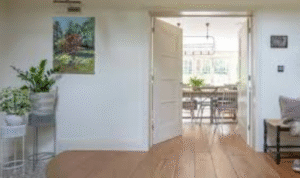

Floors are never seen alone; they always sit next to skirting boards and door frames. If you choose a floor tone that clashes strongly with these existing elements, the room can look visually noisy or chopped up.
Thinking ahead—“Will this warm floor work with my cool white skirting?” or “Will this grey tone fight with my brown doors?”—saves you from awkward combinations. Sometimes, just shifting the shade slightly warmer or cooler creates a much better match.
You don’t have to replace everything. You just want the big surfaces to feel like they belong in the same story.
Useful related reads:
- Why Floors Crack, Warp & Soften: Causes Revealed
- How can thinking about where water is likely to drip influence which flooring you pick for entry areas?
- What difference does choosing a floor tone close to existing furniture wood tones make visually?
- How can using protective mats under desk chairs prevent damage to certain types of flooring?